Guilt in The Odyssey and Games
Nolan's The Odyssey uses guilt as a tool to push anti-war themes. Could the same be done in a video game?
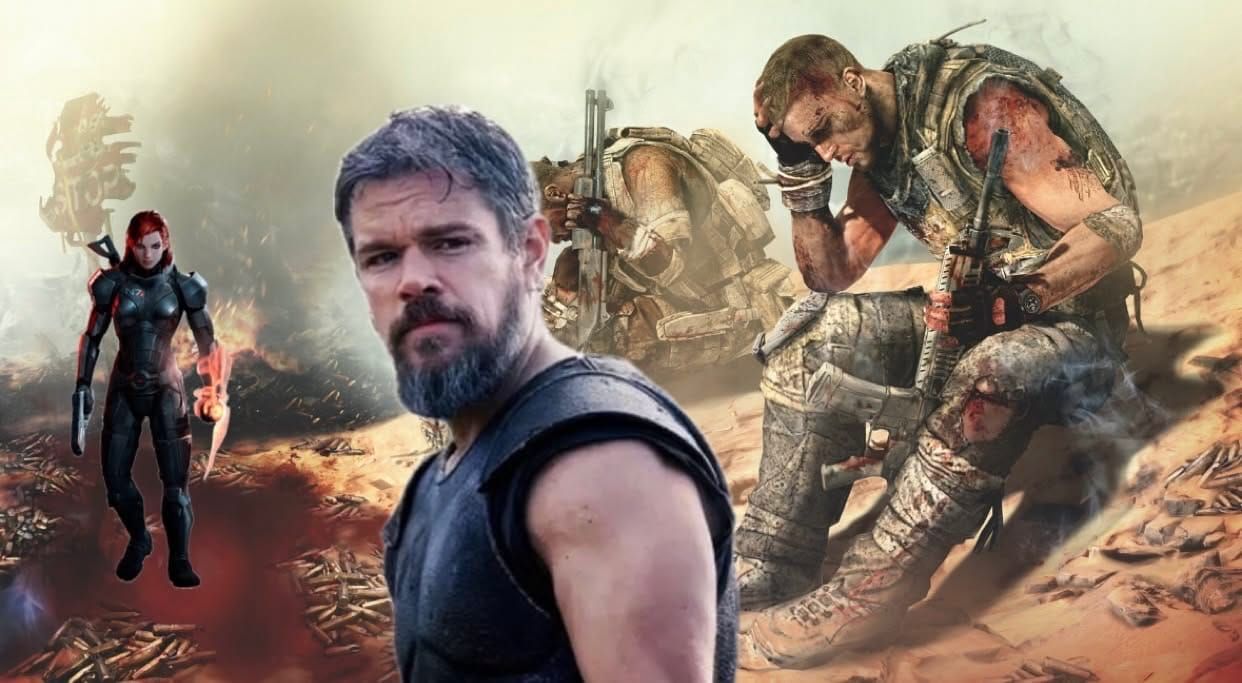
I saw Christopher Nolan's The Odyssey on opening weekend and let me tell you, it's about 3 hours of the most miserable man in Greece continuously not catching a break. It's awesome. I've been thinking about it ever since and the biggest thing that's been popping into my brain is how focused it is on anti-war themes. Nolan's version of the main character, Odysseus, feels immense guilt over his role in the Trojan War, mainly because the Trojan Horse was his idea and directly led to the slaughter of the city of Troy. The movie doesn't just tell us this, it shows us. It makes us watch with Odysseus as people die. Every kill is felt, the camera makes a point to linger on mayhem and the aftermath.
When the Sirens call to the men on Odysseus's ship, Odysseus makes everyone fill their ears with wax while he opts to tie himself to the mast in order to hear the song. Odysseus screams and cries silently as the audience hears nothing but the score. A man on the ship takes the wax out of his ears and fights against his comrade successfully, jumping into the sea and swimming toward the Sirens. The camera pans to the comrade, somberly taking up his oar and rowing. He just lost another friend, but what else is there to do than row?
Spoilers For Mass Effect 3 and Spec Ops the Line ahead!
Guilt and loss are the biggest avenues for communicating the toll of war in The Odyssey. It reminded me a lot of two games that use the same emotions both successfully and unsuccessfully to emphasize the horrors of war, the first being Mass Effect 3. In this game, the main character, Shepard, witnesses an alien invasion of Earth, one they knew was coming. It's massive. It's destructive. The player feels almost powerless as Shepard, as each enemy they kill merely brings them an inch closer to escape rather than victory. During the invasion, Shepard watches as a child boards a shuttle to escape. For a moment, it's a sigh of relief. The moment ceases with a bang as the shuttle explodes via an alien laser. For the remainder of the game Shepard has nightmares of this child, and in the end when Shepard has to decide how to handle the alien threat, an AI appears in the form of the child to remind Shepard of the guilt and use whatever emotion the player felt seeing that child die to influence the decision.
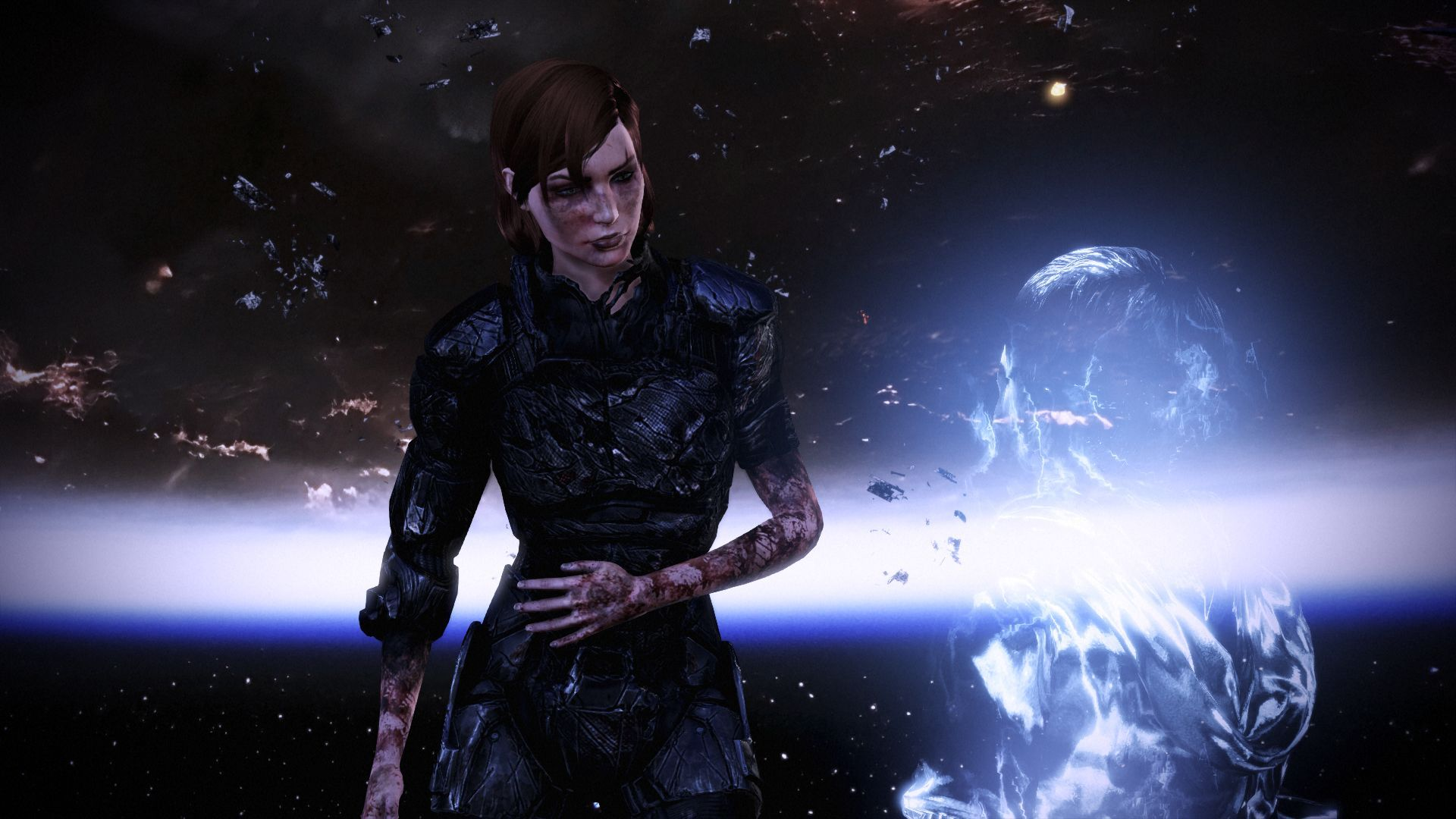
The problem is, Shepard had no hand in this child dying. They escaped and boarded the shuttle on their own. The alien that blew it up was far off and was a gargantuan space robot impervious to the rifle in Shepard's hands. The guilt doesn't feel earned, not to mention it doesn't slow the violence. After the invasion, Shepard resolves to fight harder, as if the expected emotion from watching a child die to senseless violence is to exact vengeance. To fight fire with a vat of kerosene. The story revolves around militarism and believing the idea that pre-emptively building an army is a defensive move, which dissolves any purpose of the "war is hell" nightmares Shepard has. It's the same sort of weaponization of grief that the real world US military propaganda machine loves to use. They want you to exact revenge, not stop the carnage. To believe that death is the precursor to peace.
Spec Ops the Line, however, may be the closest a game has come to being anti-war because of its use of character guilt. The game begins with the main character, Walker, leading his squad to Dubai after a devastating sandstorm buried the city. Walker and his team discover that the 33rd Infantry Battalion in charge of relief efforts in the city have been ruling over the surviving populace with an iron fist, and he's forced to fight the men he once served with in Afghanistan. Everything Walker had believed walking into the city is unraveled as the game progresses. Is the commander of the 33rd he once respected good? Are Americans there to help? Is he even there to help?
Amidst the chaos of battle and against his squad's wishes, Walker commandeers a white phosphorus mortar encampment. Justifying it, in part, by saying the 33rd used it so why shouldn't they? The UI for dropping the phosphorus is simple for the player. It's an aerial infrared view of the battlezone, and enemies are nothing but white silhouettes. They all look the same. It's impersonal and easy to pull the trigger, and the player watches the white silhouettes fade off the screen in a puff of smoke. Then the game has the player walk through the area they just shelled. They see the destruction. They hear the screams of men burning alive slowly. Then they come across the charred corpses of civilians, laden with white phosphorus burns. Walker stares at the dead, he knows he did this but it's easier to place blame elsewhere, so he does. Otherwise, he'd have to reconcile with the fact that he may not be better than the 33rd. He hadn't helped Dubai at all.
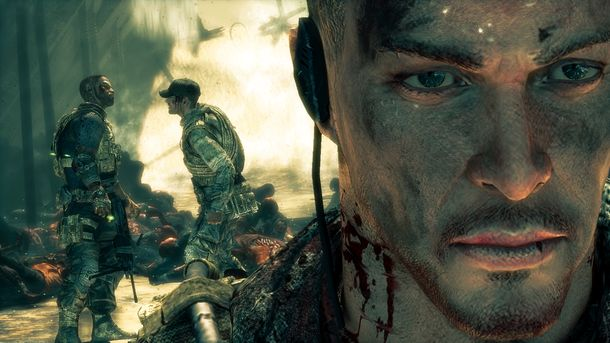
The biggest issue with an anti-war theme in games is combat-centered gameplay. How can you tell a player war is bad while trying to make war fun? Spec Ops the Line uses this scene to set up character guilt and denial. That denial makes the continuation of violence believable because Walker is lying to both himself and the player. The player sees the game through his eyes, after all. Those misguided eyes. Loading screens now to have blurbs that function more as Walker's inner thoughts more so than helpful tips. At the end, it's revealed that Walker made up events in the game to frame the 33rd and their leader as the responsible parties for Walker's actions. There were no more lies to be told, all that was left was for him to face the truth of what he did in Dubai.
"Do you feel like a hero yet?"
-A Spec Ops the Line Loading Screen tip
The question of can games be anti-war has been rattling around in my brain for a while. Like I said, it's hard to do when you want the game to be fun. Especially when so many of these games with a wartime setting have combat incorporated into their core gameplay loop. Plus, no one wants to have a game tell them that the gameplay it makes them participate in is bad actually, as if they're set up for failure. That's where character writing comes in so handy. The Odyssey reminded me of emotions that could get us so close to breaking down the ludonarrative dissonance in these games. Guilt is powerful. It can lead to regret, to change. It makes it easier when the player can go on a journey with the character they control and have those feelings together. Video Games are a powerful medium for this reason. No other art form lets you step into a character's shoes as directly as games, and that's a bond writers have to take advantage of. Especially with a theme as complex and important as anti-war.